“My child isn’t talking yet. Does that mean they have an intellectual disability or autism?”
This is a question many parents ask when a child seems to be developing differently. And honestly, it’s understandable. When speech, learning, behaviour, or social interaction becomes a concern, it can be difficult to know what you’re actually looking at.
But here’s the thing, autism and intellectual disability are not the same thing. They can sometimes occur together, but one does not automatically mean the other.
Let’s break it down.

First, Let’s Talk About Autism
Autism is a neurodevelopmental condition that affects social communication and interaction, alongside restricted or repetitive patterns of behaviour, interests, or activities.
An autistic child may:
Have difficulty with social communication and interaction.
Have delayed, limited, or different language development.
Prefer routines and find unexpected changes difficult.
Repeat certain movements, sounds, or behaviours.
Develop strong or highly focused interests.
Respond differently to sounds, touch, movement, tastes, or other sensory experiences.
Here’s something important:
Autism does NOT automatically mean intellectual disability.
An autistic child can have average, above average, or below average intellectual abilities.
For example, an autistic child may speak very well but find social interaction or understanding social cues difficult. Another may have very limited spoken language but have strong memory, visual skills, or other areas of ability.
That’s why autism is called a spectrum.
The important difference is that intellectual disability is not about struggling with just one skill. A child with intellectual disability may experience difficulties across several areas of development..for example, learning new things, understanding and solving simple problems, remembering what they have learned, communicating, and managing everyday activities independently.
So, being slower to learn one particular skill does not mean a child has an intellectual disability. What matters is whether there is a consistent pattern of difficulty across both learning and everyday functioning.
Can a Child Have Both?
Absolutely.
This is where the confusion usually begins.
A child can be:
Autistic without having an intellectual disability.
Have an intellectual disability without being autistic.
Or have both autism and intellectual disability.
They are separate conditions, but they can occur together.
“But My Child Isn’t Talking…”
This is probably one of the biggest worries parents have.
And this is where we need to slow down before jumping to conclusions.
A child who isn’t talking does NOT automatically have an intellectual disability.
And speech delay does NOT automatically mean autism either.
Imagine a child who says only a few words but understands when Mum says, “Go and bring your shoes.” The child finds the shoes, brings them, knows where they belong, can feed themselves, plays appropriately with familiar toys, and communicates what they want by pointing or taking Mum by the hand.
The child has very limited speech, but there is clearly more happening developmentally than the number of words they can say.
On the other hand, another child may also have very few words but have difficulty understanding simple instructions, learning new concepts, remembering what they’ve learned, communicating their needs, and managing everyday activities.
Those two children may both have limited speech, but their overall developmental profiles are very different.
And some autistic children may have very limited spoken language while having strengths in other areas. They may have excellent memory, strong visual skills, or communicate through gestures, pictures, signs, communication boards, or speech generating devices.
So instead of asking only:
“Why isn’t my child talking?”
we need to look at the bigger picture:
What does my child understand?
How do they communicate what they want?
How do they play?
How do they learn?
How do they solve simple problems?
How do they interact with people?
What can they do independently?
Where do they need support?
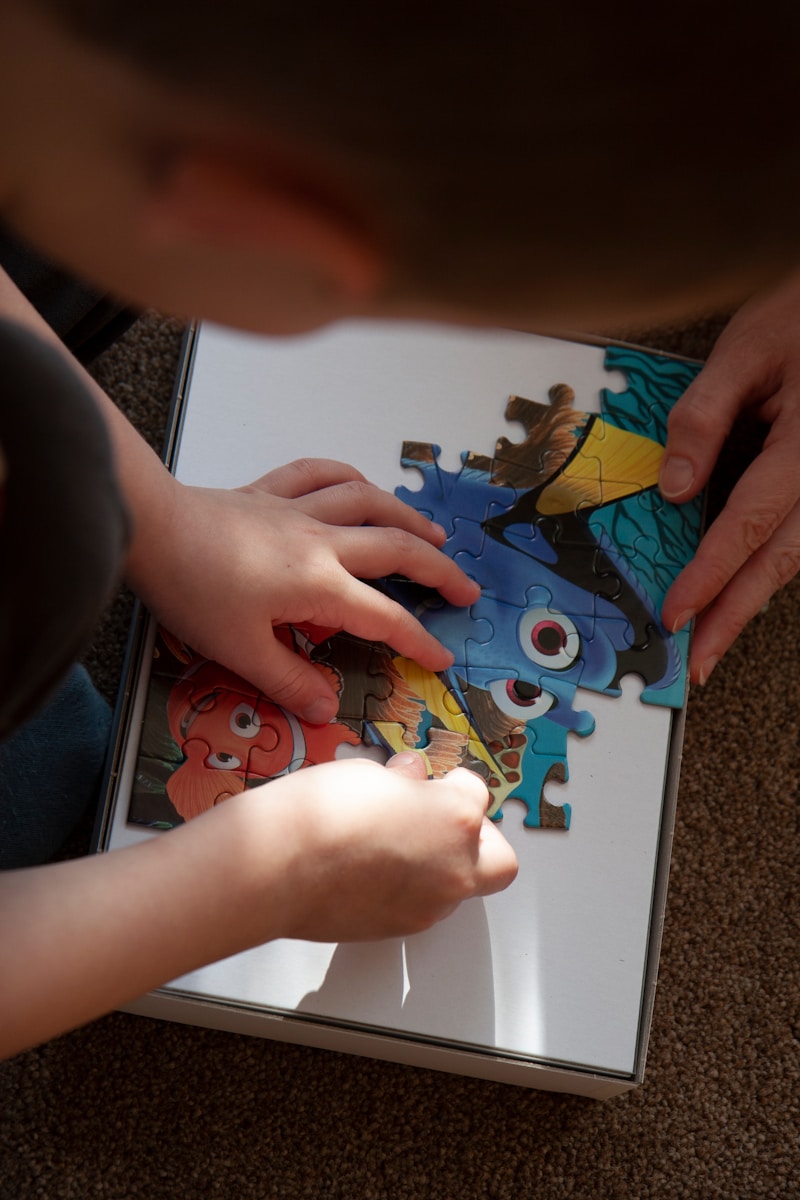
Because speech is only one piece of the developmental puzzle.
And sometimes, that one piece doesn’t tell us nearly as much as we think it does.

Thanks for taking the time to comment! We appreciate your input.